
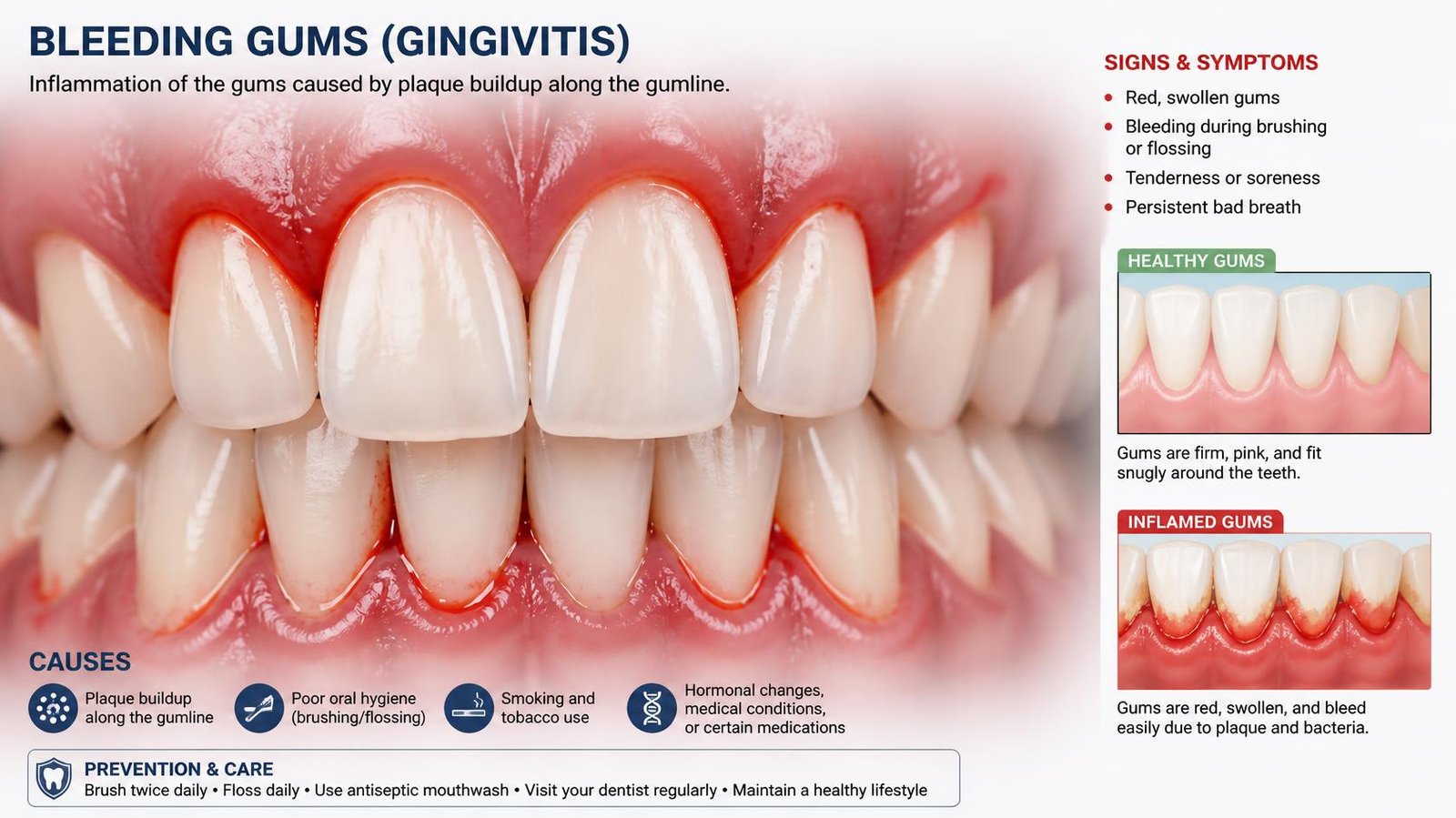
The first time bleeding gums happen, seeing blood in the sink is scary. By the time patients actually bring it up with me, they've usually been living with it for weeks — sometimes months — quietly hoping it'll just go away on its own. Sometimes it does. Most of the time, it doesn't, and there's usually one specific cause behind it.
What is happening to your gums
Gums bleed when the tissue around your teeth gets inflamed. Nine times out of ten, it's bacteria sitting along the gumline that never got properly cleaned off. Healthy gums simply don't bleed from brushing. The ADA lists this as one of the earliest signs of gum inflammation, and honestly, that matches what I see in the chair too — it's often the very first thing patients notice, before anything else feels wrong.
Causes of Bleeding Gums
That strip along the gumline is where I look first. Leave it uncleaned, and the bacteria harden into tartar, which irritates the tissue underneath. Brushing too hard doesn't help either — plenty of patients scrub like they're trying to scrub out a stain, and a hard-bristled brush only makes it worse. The ADA is pretty clear on this one: soft bristles, always. Flossing gets skipped a lot, which lets bacteria build up right where the gums are thinnest. And sometimes it's just mechanical — a denture that doesn't fit right, an old crown, braces rubbing against a sensitive spot.
But most of what I see traces back to gum inflammation, an early stage of gum disease. The JADA is clear that at this stage, good home care can actually reverse it. A few other factors matter here too, beyond plaque alone.
Low Vitamin C or K can weaken gum tissue on its own. Pregnancy hormones heighten the body's response to plaque, which is exactly why "pregnancy gingivitis" is treated as its own distinct clinical condition rather than just general irritation. Blood thinners cut down on clotting, so bleeding tends to look heavier and faster than usual. Diabetes that isn't well controlled slows healing generally, gums included. And smoking has its own trick — it hides symptoms, so once bleeding finally shows up, what's underneath is usually already worse than the bleeding alone suggests.
How we actually treat bleeding gums
Mild cases often clear up with good home care — nothing more needed. If it sticks around, a professional cleaning removes the tartar a toothbrush can't reach. Deeper deposits below the gumline need scaling and root planing. Past that point, periodontal therapy steps in to stop bone loss before it gets worse.
What to try before booking an appointment
Soft-bristled brush. Less pressure than you think you need. Floss daily, gently — I don't see this happening nearly enough. Warm salt water rinses help calm things down. Get some Vitamin C in your diet. Give it a week. The ADA notes bleeding from a new flossing habit usually settles on its own, and that lines up with what I see, too.
Why You Shouldn't Ignore It
Left alone, gum inflammation can turn into periodontal disease. It's not just cosmetic — it can eat away at the bone supporting your teeth and stop the gums from healing the way they should. The ADA also points to links between periodontal disease and other health conditions in the body, so it's not purely an oral health story.
So, When Should You Actually Come In?
Bleeding that lasts more than a week, keeps coming back, or shows up with swelling, pain, bad breath, or loose teeth — that's not a wait-and-see situation. Come in.